Paid Ads or SEO? Which Digital Marketing Strategy Delivers Better ROI for Your Business?
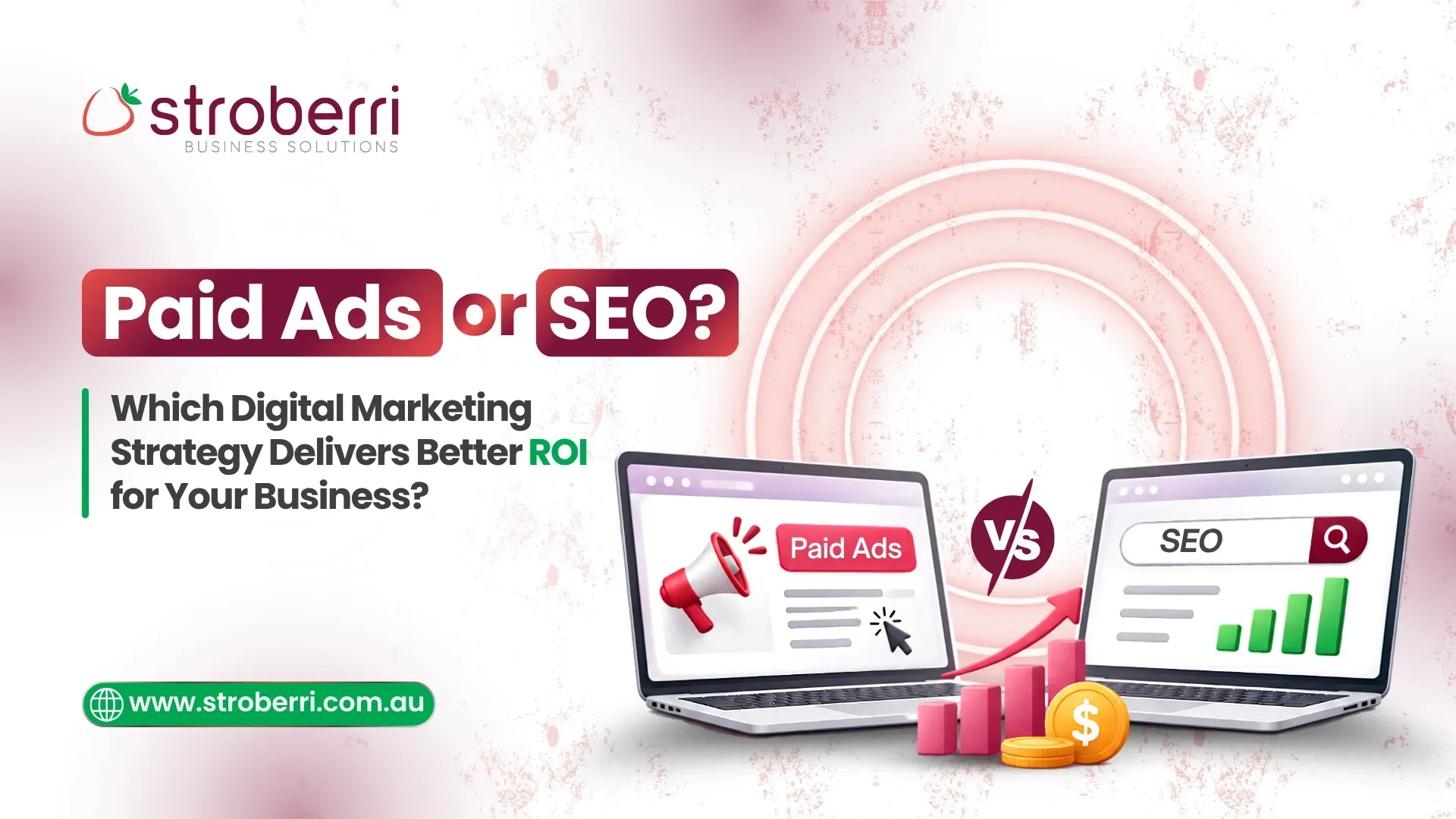
SEO (Search Engine Optimisation) focuses on optimising the website to rank organically on search engines like Google, while paid ads involve paying a platform (like Google Ads or social media networks) to display the content or ads to a targeted audience.
Even though these two options serve two different kinds of support for your business, choosing one can be difficult. Many small businesses opt for a mix of both.
Paid ads bring faster results, while SEO is best when your business goal is to get bigger return over time. When you focus more on SEO, the traffic keeps coming and the best part unlike paid ads you don't have to pay for each visit. For most businesses, strategically combining these two together will give better results for the overall business.
This choice between paid ads vs SEO is hard for many small business owners.
When it comes to businesses, whether it's small or large, every dollar counts. Especially if you are investing in something and expecting a return, the money should be spent and distributed carefully. To get the intended result, you have to analyse what's best for your business at this time and choose an option wisely. Some might say that Google Ads is the right way to go while others argue that SEO is the right answer.
This guide explains how each one works, how to measure your return, and how to decide where to spend. This way, you can make an informed decision for your business.
Quick Answer
Paid ads is the better option for you if you are looking for faster results and thereby faster ROI. However, if you are looking for a gradual and loyal progress, SEO is the choice for your business. The best results are often shown when doing both according to the needs and wants of your business. The wise way to go here in the aspect of digital marketing ROI is that, in the beginning, spend more on ads and after building customer attraction, slowly shift to SEO.
What is SEO and How Does It Generate ROI
SEO (Search Engine Optimisation) is to pull people in who are already searching for your product. You pay only for the work and each visit is free of cost.
Top ranking results determined by Google is done through the evaluation of three key factors. Does your page answer the search well? Is your website quick and easy to use on a phone? Do other trusted websites link to yours?
The best part is that SEO builds over time. A page you publish this year can still bring in calls years from now. The longer you keep at it, the less each new customer costs you.
What Are Paid Ads and How Do They Generate ROI?
Paid ads put your business in front of the right people straight away.
On Google, you choose the searches you want to appear for, like "electrician Newcastle". You set how much you will pay for a click. Google then decides which ads to show, based on your bid and how useful your ad is. You only pay when someone clicks it.
Social media ads on Facebook, Instagram, TikTok or LinkedIn work differently from Google. They show your ad to people based on their interests, age and location. This is great for getting your name out there.
How to Calculate Digital Marketing ROI
To work out your digital marketing ROI, compare how much money a channel brings in with how much it costs.
The Marketing ROI Formula
ROI = (Money earned - Money spent) ÷ Money spent × 100
For example, you spend $2,000 on a campaign and earn $8,000 from it. Your ROI is 300%. For a more accurate number, use your profit in place of total sales.
Key Metrics to Track
- Customer acquisition cost (CAC): how much you spend to win one new customer
- Lifetime value (LTV): how much one customer spends with you over time
- Return on ad spend (ROAS): how much money you make for every dollar spent on ads
- Conversion rate: the percentage of website visitors who call, book or buy
If a customer spends $3,000 with you over three years, paying $300 to win them is a great deal.
Why SEO ROI Is Harder to Measure
SEO is harder to track because people often visit your website a few times before they call. To track it better, set up conversion tracking in Google Analytics, use call tracking, and add "How did you hear about us?" to your enquiry form. Then compare your Google leads each month.
SEO vs PPC ROI: Head-to-Head Comparison
Ads are faster and easier to control. SEO costs less per customer over time.
| Factor | SEO | Paid Ads |
|---|---|---|
| Cost | Upfront work, then regular upkeep | You pay for every click |
| Speed | Usually 6 to 12 months | Results within hours |
| Traffic | Free visitors from Google | Visitors you target and pay for |
| Control | Slow to change | Change your budget any time |
| Long-term value | Keeps working after you pause | Stops when you stop paying |
When Paid Ads Deliver Better ROI
Ads usually work best when you need results fast or for a short time.
If your business is new, Google is still getting to know your website. Ads can bring in enquiries in the first week while your SEO slowly builds.
Ads also suit offers with a deadline, like an EOFY (End Of Financial Year) sale or a Christmas special. Turn them on for those weeks and off when the offer ends.
When big brands hold the top spots on Google , ads get you onto page one today.
When SEO Delivers Better ROI
SEO usually works best for long-term growth, or when ad clicks are expensive.
Helpful content shows people you know your stuff. Many people also trust free Google results more than ads.
In some industries, like law, finance and software, one click can cost tens of dollars. Every visitor from SEO saves you that cost.
SEO also reaches people who are still researching, like someone searching "how often should I service my car". A helpful blog post puts your business in front of them early. When they are ready to buy, they remember you.
Why Combining SEO and Paid Ads Delivers the Best ROI
SEO and ads work better together. Ads quickly show you which searches bring in customers. You can then use that information to plan your SEO. When you appear in both the ads and the free results, people see you twice and trust you more. You can also show ads to people who visited your website from Google, which reminds them to come back.
Common ROI Mistakes to Avoid
- Giving up on SEO too early. Give it at least six months.
- Sending ad clicks to your homepage. A page made for that ad gets more enquiries.
- Counting clicks instead of customers. Enquiries and sales are what matter.
- Skipping negative keywords. Searches with words like "free" or "jobs" can waste your ad money.
- Stopping SEO once you rank. Your competitors keep working, so keep improving your website.
Frequently Asked Questions
How Long Does SEO Take to Show ROI?
You can only see consistent results after six or usually twelve months. However, most companies notice initial progress within the first three to six months. SEO takes time to reflect its progress.
Can Paid Ads Help SEO Rankings?
No, paid ads don't have any effect on Google rankings. But it is something that brings in more people to search for your business name. Also with that, you can understand how and which keywords work best.
Should a Small Business Start With SEO or PPC?
Start with the basics of local search engine optimisation and spend a small amount on Google Ads for your best service or promotion.
Choosing the Right Strategy for Your Goals
The answer to paid ads vs SEO depends on where your business is today and where you
want it to be in the future.
If your goal is an instant effect and faster ROI, paid ads is the best way to go. But if you are looking for real, loyal customer following and doesn't want to pay for every click, choose SEO. Most small businesses perform well while combining both. Using these two wisely will help grow your business faster and better. Use ads for the leads and then move your money and attention to SEO while your rankings grow.
Whatever you choose, keep an eye on the changes. Look at your enquiries, bookings and sales. These numbers will show you where you should focus more.
Stroberri helps Australian businesses find the right mix of SEO and paid ads, and then makes it happen.
Contact our team today.