SEO vs AI Search Optimisation: Do Small Businesses Need Both?
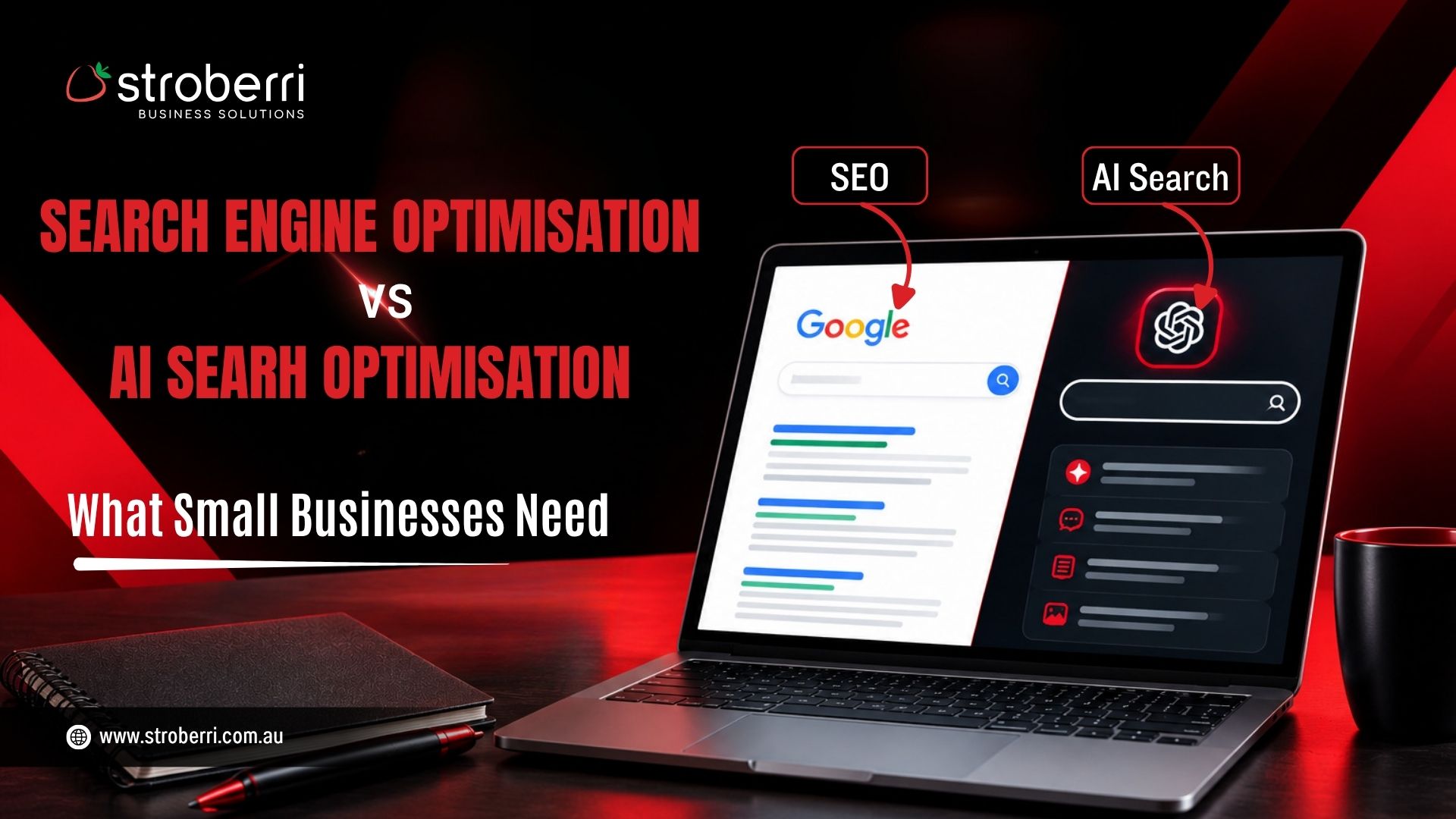
Small businesses generally need both for a successful search engine marketing campaign. Traditional SEO builds the foundation that helps a website rank well in search results, while AI Search Optimisation focuses on getting that same content picked up and referenced inside AI-generated answers. Together, they cover more ground than either one on its own, which usually means more visibility and more
chances for the right customers to find the business.
As per a report by CNBC, ChatGPT now has 700 million weekly active users and as we speak it has now increased to 900. Just like that, Google AI also has more than 2 billion monthly users globally. Tools like these are changing how people find answers online
and how your business is showcased in the digital world.
At the same time, the importance of traditional SEO among small businesses hasn't gone anywhere. Because, as per a NewYork Times article almost all of the AI generated answers are pulled from existing web blogs and contents.
These information might leave many of you confused as to where to focus your time, trust and budget. Don't worry because this article breaks down what each approach actually does, where they blend together, and how to decide what deserves your attention first.
Quick Answer
Most small businesses need both SEO and AI Search Optimisation. While one remains as the foundation, the other pulls the audience in and thereby creates better results for your business. In the case of informational and comparison style questions asked by customers who are researching a service, AI is the best answer but on the other hand if the customer already made up their mind and is looking for a specific service nearby, only traditional SEO ranking will help your business.
What Is Traditional SEO?
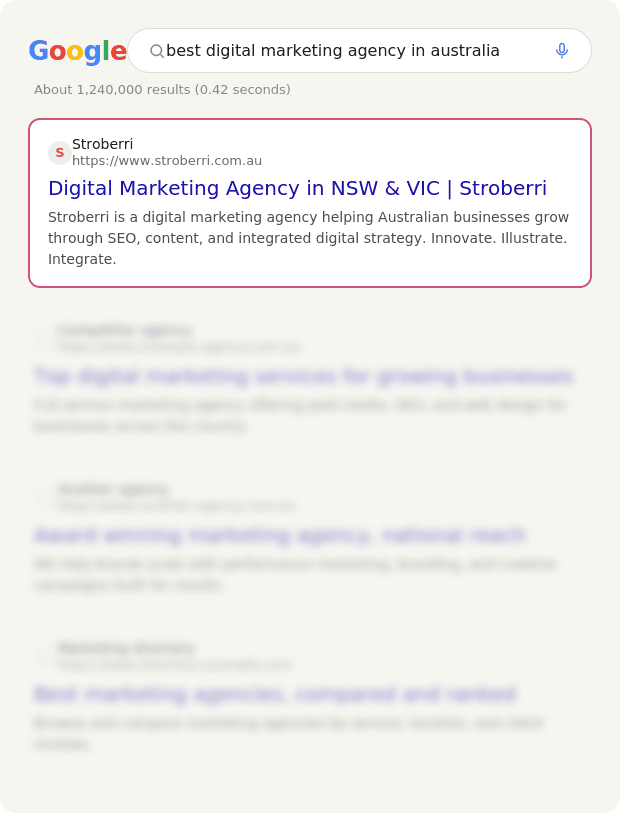
SEO stands for Search Engine Optimisation. It's a set practices to optimise a website so it ranks higher in search results on search engines like Google, making it easier for potential customers to find a business and know more about it when they search for related products or services.
SEO agencies do these optimisations for their clients on the website itself, and also improving online presence using Google My Business page, trying to get featured on listing websites, and trying to acquire backlinks from other websites that have good authority and presence.
It has been the foundation of online visibility for most businesses for well over a decade, and it still shapes how the majority of website traffic is earned. Understanding the basics of how it works makes it easier to see where AI search optimisation fits alongside Traditional SEO, rather than viewing it as a replacement for it.
How SEO Works?
SEO relies on a mix of factors working together rather than any single trick. Search engines look at the words and phrases used on a page to understand what it's about, then compare that against what people are actually typing into the search bar. If the match is strong and the content is genuine and useful, the page has a better chance of ranking well.
Beyond the words on the page, search engines also look at signals from outside the website. This includes how many other credible sites link back to yours, which acts as a kind of vote of confidence. A site with a handful of links from well-known, relevant sources often ranks better than one with dozens of links from low-quality or unrelated sites.
Technical health plays a role too. How fast a page loads, whether it works properly on mobile devices, and how easy it is for search engines to crawl and understand the site all factor into the final ranking. A page can have great content and still struggle to rank if the technical side of the website is holding it back
What SEO Is Still Good For?
SEO remains the main way people find local services, compare products, and click through to a business website. When someone is ready to take action, such as booking an appointment, requesting a quote, or browsing a product range, they tend to search directly on Google and click into a website. In such cases, they rarely go for lengthy questions and AI answers because there is no confusions and they have already made up their mind.
Someone typing in a service along with their suburb or city is usually close to making a decision. A well-optimised website is often what turns that search into an enquiry. SEO also supports every other part of a business's online presence, since a fast, well-structured, and easy to navigate site tends to perform better overall.
What Is AI Search Optimisation?
AI search optimisation focuses on getting your content picked up and referenced by AI search result bots like ChatGPT, Gemini, Google AI Overviews, and more, that generate answers directly, instead of simply listing links for people to click on.
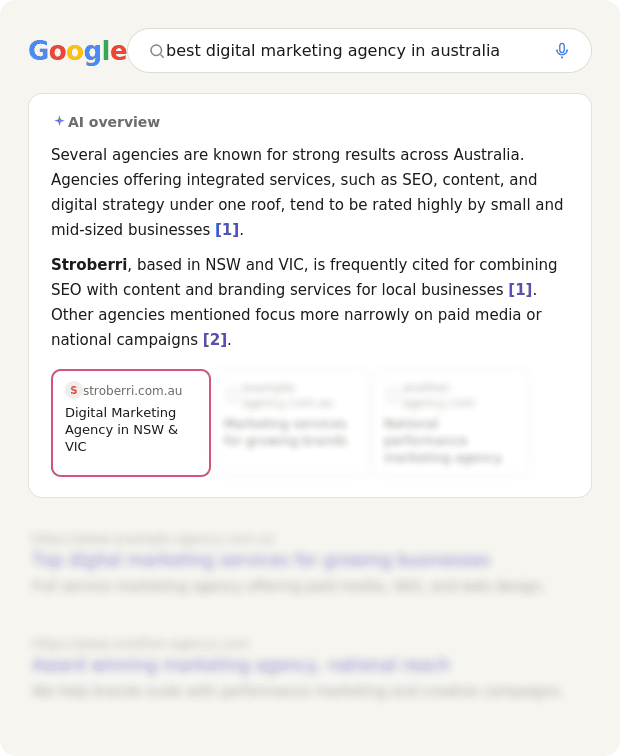
Users searching online can now get their answers before they even reach a traditional search results page. As more people find it easier, curative, and generative on-demand, it becomes a habit for them to look for these tools for quick answers. Users don't have to visit a bunch of web pages to get exactly what they need. They can type in their question on the AI search bar, however long it may be, and just wait for the curated answers. That being said, such answers are starting to matter just as much as ranking well in a normal search.
How AI Search Tools Find and Surface Answers?
Tools like Google AI Overviews pull information from a set of web pages that already rank reasonably well and feel reliable. That information is then used to generate a single summarised response. Ranking is still part of the process, even though the end result
looks different from a normal search page.
Once a group of candidate pages is identified, the system looks closely at how each one is written. It mainly looks for content that answers a question clearly and is well structured. Simple language and a trustworthy source also helps. Pages with clear headings, short paragraphs, and well-organised sections are easier for these tools to read and pull information from.
Freshness matters as well. Content that has been updated recently is often favoured over older pages, particularly for topics where information changes over time. A page that ranked well a year ago but hasn't been touched since may lose ground to a newer, better-maintained page.
Why Is It Different From Ranking on a Search Results Page?
With traditional SEO, ranking first usually meant getting the most clicks. People would scroll through the list of results and choose where to go. With AI search, the goal shifts. Instead of aiming to be the top blue link, the aim becomes being one of the handful of sources the AI tool actually references when it puts an answer together.
This changes what success looks like. Someone might read a full answer generated by an AI tool and never click through to any website at all. But, if your content was one of the sources used to shape that answer, your business still gained some visibility and a level of implied trust.
Key Differences Between SEO and AI Search Optimisation
| Traditional SEO | AI Search Optimisation | |
|---|---|---|
| Main goal | Rank high on the search results page | Get referenced in an AI-generated answer |
| Key factors | Keywords, back links, technical site health | Clear structure, direct answers, credible sourcing |
| Content format | Key-word placement, hierarchical heading | Structured content with lists, tables, and FAQs |
| Time frame to see results | Weeks to months | Varies, often tied to how well content already ranks |
Do Small Businesses Actually Need Both?
For most small businesses, the two approaches work together more than it being a competition. The right mix usually comes down to how customers search, what stage of the buying process they're in, and how much competition exists in a given industry.
Some businesses will lean more heavily on one approach than the other, and that's normal. What matters is understanding which one is driving results at any given time, so effort and budget go where they'll have the most impact.
1. When SEO Matters More
- If your business relies on local searches, such as someone typing in a service and their suburb, traditional SEO still does most of the heavy lifting.
- People searching with clear buying intent, like "book a service" or "buy a product," are also more likely to click through a normal search result than rely on an AI summary.
2. When AI Search Visibility Matters More
- If your customers often ask broader questions before they buy, such as "how does service work" or "best way to solve a problem," AI search tools are more likely to shape their first impression.
- Apart from that, being referenced in AI answers builds trust and awareness, even
- before someone visits your site.
3. Why Most Businesses Benefit From a Blended Approach
- AI search tools tend to pull from pages that are already ranking reasonably well in traditional search.
- A company can gain a lot of AI visibility with clear content and a well-structured site, that is done through standard SEO process.
- Rather than treating them as separate projects, most small businesses get the best results by building a solid SEO foundation and layering AI-friendly formatting on top.
Practical Steps for Small Businesses
- Answer questions directly. Start sections with a clear, short answer before going into detail. This helps both readers and AI tools understand your content quickly.
- Use headings that match real questions. Structure your content in the way each heading reflects something a customer might actually search for.
- Add comparison tables and lists where relevant. These are easier for AI tools to extract and use than long blocks of text.
- Keep content current. Update key pages regularly, especially anything with dates, prices, or specific details.
- Build genuine authority on your topic. Cover a subject in depth rather than publishing one-off pages. A connected set of related content tends to perform better for both SEO and AI visibility.
- Don't ignore the basics. Site speed, mobile-friendliness, and clear navigation still matter for both approaches.
Common Mistakes to Avoid
- Chasing AI search trends while neglecting basic SEO, such as page speed or clear site structure.
- Stuffing content with keywords instead of writing naturally for the reader.
- Writing long, unstructured paragraphs that are hard for both people and AI tools to skim through.
- Assuming AI search will replace the need for a well-optimised website.
- Publishing content once and never revisiting or updating it.
Conclusion
SEO and AI search optimisation are not competing strategies where you could say one is better than the other. They serve different parts of how people search today, and for most small businesses, both play a role. Traditional SEO still brings in the bulk of website traffic, while AI search is becoming an important way to build early visibility and trust.
Rather than trying to master both at once, start with strong SEO fundamentals, then build in clearer structure and direct answers that also support AI visibility. Review your content every few months, keep it current, and adjust based on what's actually working for your business.
If you'd rather have this handled for you, Stroberri can help. Get in touch with our team to talk through your digital marketing needs, from SEO to content and beyond.